


In June, the Maltese Episcopal Conference established the Interdiocesan Commission for Promoting Integral Human Development (IHD). It brings together the invaluable work previously carried out by the Justice and Peace Commission and the Environment Commission under one vision: promoting the dignity of every human person and the care of creation as our common home.
The commission’s remit includes issues relating to work, the economy, poverty and environmental justice. But its purpose goes deeper than responding to individual social or environmental problems. It is rooted in the Church’s conviction that every person possesses an inherent, God-given dignity and that authentic human development must embrace the whole person: spiritually, socially, culturally, morally and economically.
This vision is especially relevant today. Across Malta, many people sense that something is missing. We are wealthier than previous generations, consume more and are more digitally connected than ever. Yet, loneliness, anxiety and social division continue to grow.
We also find ourselves confronting unprecedented environmental and social pressures. The continuing loss of green spaces and relentless construction leave many communities feeling increasingly disconnected from nature and one another.
These challenges invite us to ask a deeper question: What kind of development are we pursuing? Economic growth brought undeniable benefits to Malta but it cannot be the only measure of progress. A model that depends on continual expansion of consumption, construction and resource use inevitably raises questions about its long-term sustainability. Development cannot be considered authentic if it comes at the expense of ecosystems, erodes community life or leaves future generations with fewer opportunities than our own.
Catholic social teaching offers a different way of reading these realities. Rather than viewing people primarily as isolated individuals or simply as producers and consumers it understands every person as fundamentally relational: connected to God, to one another and to creation. Pope Francis repeatedly reminded us that “everything is connected”. Human dignity, social justice, decent work, affordable housing, environmental stewardship and care for the vulnerable are not competing priorities but different expressions of one coherent vision of the common good.
This integrated vision is particularly important in Malta, where many of today’s challenges are deeply interconnected. The affordability of housing cannot be separated from patterns of development and land use. Environmental degradation cannot be divorced from the economic choices that shape our islands. Climate resilience, social cohesion and economic justice are not separate conversations but part of the same question: What kind of society are we building and for whom?
No single institution, political party or organisation can address these challenges on its own. The Church certainly cannot. But it can help create spaces where people listen to one another, discern together and rebuild the relationships that sustain society. In this sense, the work of the commission is less about producing statements than about connecting, convening and encouraging collaboration across different sectors of society.
Its role is not to offer partisan political solutions or simply respond to the consequences of poverty and exclusion, important as those efforts are. Rather, it seeks to understand the economic, social and cultural forces that generate these problems in the first place.
Catholic social teaching challenges us to ask deeper questions about the organisation of our economy, the dignity of work, the distribution of opportunities and the responsibilities we owe one another.
Importantly, this tradition is not intended only for Catholics. It is a gift offered to all people of goodwill: a framework for dialogue about the kind of society we want to build together. At a time when public life is increasingly polarised and communities often feel fragmented, such dialogue is more necessary than ever.
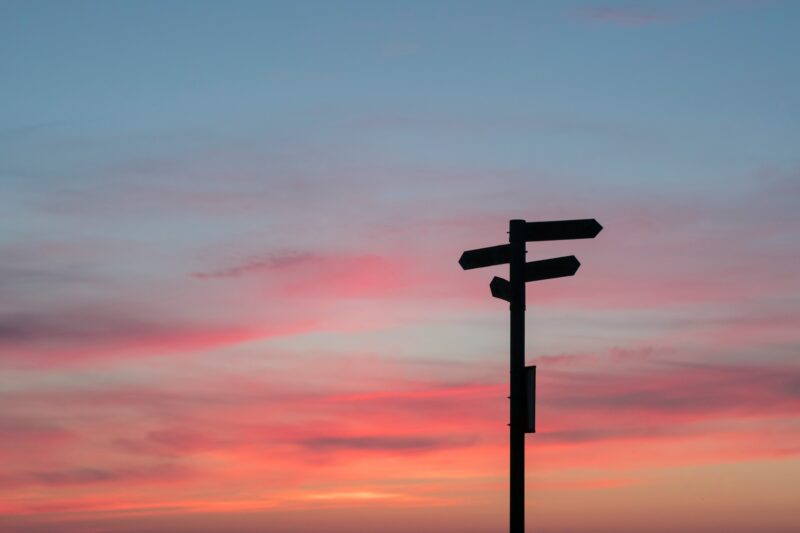
Our country stands at a crossroads. The real question facing Malta is not whether we can continue to grow but whether we can learn to flourish without sacrificing the people, communities and natural environment on which all genuine prosperity ultimately depends. Prosperity means little if young people cannot afford a home, if communities lose the spaces where relationships flourish or if environmental degradation diminishes the quality of life that future generations will inherit.
Mark Cachia
This article first appeared in the Sunday Times of Malta (30/08/2026)