



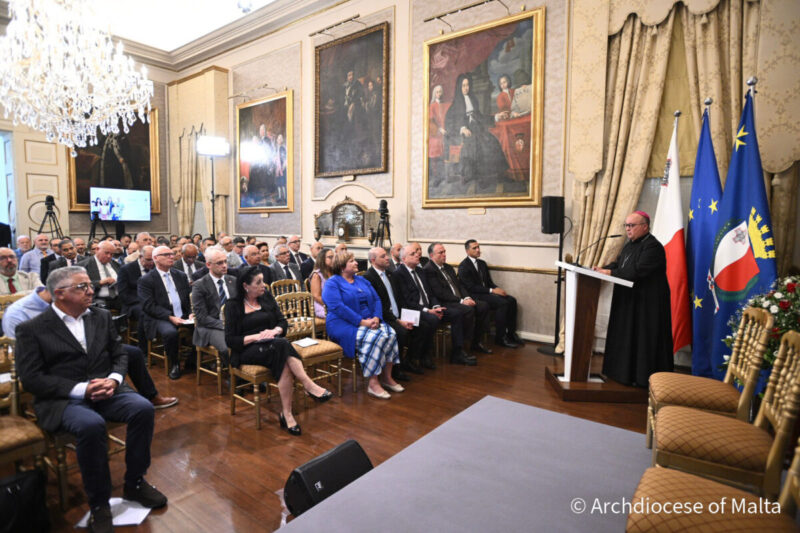
The Archbishop’s address at this year’s State of the Nation Conference deserves our full attention. To those who will accuse him of hypocrisy, when referring to how reputation is hard to build but so easily lost he himself acknowledged that: “I’m acutely aware that the Church is not immune to this. And we have an unfortunate habit of learning this painful lesson the hard way.”
The most striking statement of his address was this: “When informal networks become more powerful than formal institutions, the danger is no longer simply corruption. The danger is the capture of the nation itself.” That is a statement worth pondering, no matter who says it. And at this particular point in our history, it makes uncomfortable reading for anyone who relies on such networks or merely resorts to them when all else fails. And of course, when legitimate channels are under resourced or staffed with people who are unwilling or unable to take the right decisions, institutional failures become systemic, and people end up looking for solutions within their own networks.
The Archbishop made reference to “too many accounts of businessmen buying influence”. What is hardly ever said is that for every businessman who buys influence, there are so many others who are, as a direct consequence, put at an unfair disadvantage.
So this is not about businesses versus the rest of society; it is about a select few undermining the interests of the rest of us, whether we are in business or not. It is ultimately about unchecked concentration of power in the hands of a few. And if those few are happy to be counting the stars they own as in the novella ‘The Little Prince’, and have no sense of duty of care towards the country and its reputation, our people, the environment and our cultural heritage, then the future is really at risk.
Marisa Xuereb
Council member of the Interdiocesan Commission for Promoting Integral Human Development